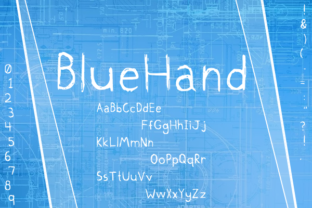
BlueHand Font: A Handwritten Typeface by Marlee Pagels
There is something quietly disarming about a well-crafted handwritten font. In a digital world dominated by clean sans-serifs and uniform typography, a typeface that mimics natural hand-lettering can stop a reader mid-scroll. BlueHand, created by designer Marlee Pagels, is one such font. It does not scream for attention. Instead, it invites a closer look. Whether you are a blogger trying to warm up your brand, an educator creating approachable materials, or a freelancer looking for a signature style, BlueHand offers a balance of personality and readability that is surprisingly hard to find.
What makes this font stand out is not just its visual appeal, but the thought behind its design. Pagels has created something that feels both personal and professional. It is not overly ornate, nor does it sacrifice legibility for flair. BlueHand hits a sweet spot that makes it useful across a wide range of contexts, from casual social media posts to more polished presentation decks. Let us explore what this font really offers and how you might put it to work.
What BlueHand Is and Why It Matters
BlueHand is a handwritten-style typeface that captures the natural rhythm of pen on paper. Unlike many script fonts that feel overly polished or digitized, BlueHand retains a human quality. The letters have slight variations in weight and spacing, which gives the text an organic, unscripted feel. This is not a font that looks like it was traced by a machine. It looks like someone sat down and wrote it by hand, carefully but without rigid perfection.
For professionals and creators who want to communicate warmth, authenticity, or approachability, this matters. A font like BlueHand can soften a message without making it look amateurish. It bridges the gap between formal and friendly. That is a hard line to walk, and Pagels has managed it with noticeable skill.
The font includes both uppercase and lowercase characters, numerals, punctuation, and multilingual support, making it practical for global use. It also features ligatures and alternate glyphs, which add to its natural flow. When you type with BlueHand, the letters connect and transition in ways that feel intuitive, not forced.
Key Characteristics That Define the Font
To understand where BlueHand fits best, it helps to look at its core traits:
- Natural stroke variation. The letterforms have organic thickness changes, mimicking the pressure of a real pen. This gives the text depth and texture.
- Consistent readability. Despite its casual appearance, each character remains distinct. Even at smaller sizes, words do not blur together.
- Moderate slant. The slight italic lean adds a dynamic, forward-moving energy without making the text hard to read.
- Approachable tone. The overall impression is friendly, personal, and unpretentious. It feels like a note from a trusted colleague, not a formal document.
- Versatile weight. It is not too light or too bold, which means it works well in both headings and body text, though it shines brightest at medium to larger sizes.
These qualities make BlueHand particularly effective in contexts where you want to establish a human connection. That could be a thank-you page on a website, a handwritten-style quote for social media, or a personal brand logo that needs to feel authentic.
Practical Applications Across Different Fields
The real test of any font is how it performs in the wild. BlueHand holds up well across a surprising number of use cases. Here is how different professionals might integrate it into their work.
For Bloggers and Content Creators
If you run a lifestyle blog, a travel journal, or a personal newsletter, your visual identity matters. BlueHand can serve as a display font for post titles, pull quotes, or section headers. It pairs nicely with clean sans-serif body fonts like Open Sans or Lato. The contrast between a handwritten headline and a neutral body text creates visual hierarchy that guides the reader naturally. For social media graphics, BlueHand adds a human touch that often outperforms overly polished typography in engagement metrics.
For Educators and Trainers
Course materials, worksheets, and presentation slides sometimes feel sterile. BlueHand can warm them up. Imagine a handout for a creative writing class or a workshop on design thinking. The font itself communicates creativity and openness. It signals that the material is not just information, but an invitation to engage. For younger audiences, a handwritten font can make instructions feel less intimidating and more like a conversation.
For Entrepreneurs and Small Business Owners
Branding is about more than a logo. It is about the feeling people get when they interact with your business. BlueHand works well in packaging, thank-you cards, email headers, and even product labels. A small coffee roaster, for example, could use BlueHand on their bags and website to evoke a handmade, artisanal feel. A wedding planner might use it in client communications to project warmth and personal attention. The font becomes part of the brand voice.
For Marketers and Social Media Managers
Campaign assets often compete for attention in crowded feeds. A handwritten font like BlueHand can break the visual monotony. It works especially well in storytelling formats, such as Instagram carousels, email subject lines, or landing page headers. When paired with a strong photo or illustration, BlueHand helps the text feel like part of the image, not just an overlay. It is also effective for CTAs that need to feel inviting rather than pushy.
For Freelancers and Creative Professionals
Your portfolio and proposals are your calling cards. A handwritten font can differentiate you from competitors who rely on stock typography. Use BlueHand sparingly in your portfolio headings, about page, or client proposals. It adds a layer of personality that helps potential clients remember you. Just be careful not to overuse it. A little handwritten text goes a long way.
For Digital Products and User Interfaces
While handwritten fonts are not typically recommended for long body text on screens, BlueHand is legible enough for short labels, quotes, or callout sections in apps and websites. It works well in digital invitations, e-cards, or onboarding screens where you want to create a welcoming first impression. The key is restraint. Use it to highlight specific moments, not entire pages.
Benefits That Go Beyond Appearance
Using BlueHand is not just about making things look pretty. There are practical benefits that affect how your audience perceives and interacts with your content.
- Improved reader engagement. Handwritten fonts often hold attention longer because they feel personal. Readers may pause, re-read, or feel a subtle emotional connection.
- Enhanced brand recall. A distinctive handwritten typeface can become a recognizable part of your visual identity. People remember how your content made them feel.
- Faster visual processing for short text. For headlines, quotes, and single sentences, handwritten fonts can be processed quickly because they mimic natural reading patterns.
- Reduced formality barriers. If your goal is to encourage dialogue, feedback, or collaboration, a warm font helps lower the perceived distance between you and your audience.
These benefits are not universal, of course. Context matters. But when used intentionally, BlueHand can shift the tone of your communication in a meaningful way.
Practical Considerations When Using BlueHand
No font is a magic bullet. Here are a few things to keep in mind as you evaluate whether BlueHand fits your project.
Size matters. BlueHand reads best at medium to large sizes. For body text below 14 points on screen, consider whether the letterforms remain clear. Test it at your intended sizes before committing.
Pairing is everything. Handwritten fonts need a clean counterpart. Pair BlueHand with a neutral sans-serif or a subtle serif for body text. Avoid pairing it with another script or display font, as the result can feel busy.
Use it sparingly. The power of a handwritten font diminishes with overuse. Reserve BlueHand for headlines, quotes, signatures, or accent elements. Let it breathe.
Test across devices. How a font renders on a high-resolution monitor versus a mobile screen can vary. Download the font and test it in your design software or on your website before going live.
Licensing matters. Ensure you have the appropriate license for your use case, especially if you plan to use BlueHand in commercial products, logos, or digital assets. Respect the creator's work.
Real-World Observations and Recommendations
Having worked with a range of handwritten fonts over the years, I have seen many that look charming in isolation but fall apart in real use. BlueHand avoids most of those pitfalls. Its letterforms are consistent enough for professional work yet varied enough to feel human. That is a rare combination.
For bloggers and content creators, I recommend using BlueHand for your post titles and pull quotes, then switching to a clean sans-serif for the body. This creates a visual rhythm that feels curated but not chaotic. For business owners, consider using BlueHand in your email signature or on your about page. It adds a personal touch without sacrificing professionalism.
One area where BlueHand particularly excels is in printed materials. On paper, the stroke variation becomes even more pronounced, giving the text a tactile quality that digital screens sometimes flatten. If you design business cards, thank-you notes, or brochures, BlueHand is worth testing in print.
Marlee Pagels has designed a font that respects the tradition of hand-lettering while adapting to modern needs. It is not a novelty font. It is a functional tool that happens to look good. And in a world where audiences are increasingly skeptical of overly polished corporate communication, that authenticity is valuable.
If you are looking for a handwritten font that balances personality with practicality, BlueHand deserves a close look. Try it in a real project, test it with your audience, and see how it shifts the tone of your work. Sometimes the smallest design choices make the biggest difference.