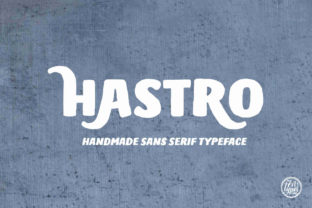
Hastro: A Bold Sans Serif with Expressive Swashes
Every now and then a typeface comes along that manages to feel both sturdy and playful at once. That is exactly what you get with Hastro. On the surface, it looks like a straightforward sans serif font—clean, bold, and built for impact. But the moment you start digging into its character set, you realize there is more going on. The slightly rough edges give it a handcrafted feel, something you do not usually expect from a sans serif. Add in the PUA-encoded swashes, and suddenly this font moves from simple to seriously expressive.
If you have ever struggled to find a typeface that balances structure with personality, Hastro might be exactly what you need. It does not try to be invisible. It makes a statement without screaming. And that is a rare balance to strike.
What Makes Hastro Stand Out
At its core, Hastro is a display font with strong, confident letterforms. The strokes are thick and consistent, but the edges are intentionally a bit rough. That roughness is not a flaw—it is part of the charm. It gives the typeface a tactile, almost printed-in-real-life quality that feels authentic rather than overly polished.
The font comes in two variations: Regular and Italic. That might sound minimal, but each variant carries its own energy. The Regular is steady and grounded, perfect for headlines and bold statements. The Italic adds a dynamic forward tilt that works beautifully for emphasis or shorter bursts of text. Together, they give you enough flexibility to build hierarchy without needing a dozen weights.
What really sets Hastro apart, though, are the swashes. These are decorative letter variants encoded directly into the font, so you can access them easily with most design software. They range from subtle flourishes to more dramatic extensions, letting you dress up logos, titles, or even single words without touching a pen tool.
A Typeface with Real Personality
Personality in typography is hard to define, but you recognize it when you see it. Hastro has a confident, approachable vibe. The rough edges keep it from feeling too corporate or sterile. It is the kind of font you would use for a craft brewery label, a music festival poster, or a creative agency website. It feels human.
That human quality matters more than most designers give it credit for. Audiences today are good at spotting generic design. When everything looks stock, nothing feels genuine. Hastro brings a handmade energy that can make a brand feel more relatable. It is not trying to be perfect, and that is exactly why it works.
Where Hastro Works Best Across Projects
Because of its strong visual presence, Hastro is best suited for display use. That means headlines, titles, logos, short blocks of text, and any spot where you want the words to carry weight. Here are some of the most effective applications I have seen and used personally:
- Logo Design: The swashes give you built-in customization, so you can create wordmarks that feel unique. A single swashed letter can become the focal point of an entire identity.
- Editorial Design: Magazine covers, article headers, and pull quotes benefit from Hastro’s bold stance. It commands attention without overwhelming the layout.
- Packaging Design: Whether it is a craft coffee bag or a small-batch skincare box, the rough edges add texture that reads well on physical products. The Italic variant works especially well for taglines.
- Web Design: For hero sections, call-to-action buttons, and navigation headers, Hastro holds up well on screen. Keep the text size generous to let the edges and swashes shine.
- Social Media Graphics: In a feed full of smooth, generic fonts, Hastro stands out. It works for quote cards, event announcements, and product launches.
- Posters and Print: Concert posters, event flyers, and signage all benefit from the font’s readability at large sizes. The rough edges add a slight grunge or retro feel depending on your color choices.
- Personal Projects: Hobbyists and crafters can use it for greeting cards, stickers, and custom merchandise. The PUA encoding makes it accessible even if you are not a professional designer.
Readability and Visual Hierarchy
One concern people often have with expressive fonts is readability. Can you actually use Hastro for more than just a headline? The answer is yes, but with some thought. At large sizes—above 36 points—the letterforms are clear and easy to read. The rough edges do not interfere with legibility because the basic shapes remain straightforward.
For subheadings or short paragraphs, the Regular variant works well when paired with plenty of letter-spacing. The Italic variant is better reserved for short phrases or emphasis, as the slant can make longer passages feel cramped. When you are building hierarchy, use Hastro for the top level and a simpler typeface for body copy. This gives you contrast and keeps the design balanced.
From a brand perception standpoint, Hastro communicates confidence and approachability. It is not overly serious, but it is not casual to the point of being unprofessional either. That middle ground is invaluable for businesses that want to feel creative without losing credibility.
Practical Guidance for Choosing and Using Hastro
Before you commit to any font, it pays to evaluate how it fits your specific project. Here is a straightforward way to think about whether Hastro is the right choice:
- Evaluate your project’s tone: Is the brand or message creative, casual, or human-centered? Hastro works best for projects that want to feel authentic rather than corporate.
- Test at different sizes: Download the font and try it at the sizes you actually plan to use. Check how the rough edges look on screen versus in print. Small sizes below 24 points may lose some detail.
- Experiment with swashes: Not every letter needs a flourish. Use swashes sparingly—on the first letter of a headline or on a single word in a logo. Overuse can make the design feel busy.
- Review font pairings: Hastro pairs well with clean sans serifs and neutral serifs for body text. Fonts like Open Sans, Lato, or Merriweather give good contrast. Avoid pairing it with other high-personality typefaces—you want one star, not a crowd.
- Check your software: Because the swashes are PUA-encoded, they work in most major design tools including Adobe Illustrator, Photoshop, InDesign, and even some online editors. If you are using a less common tool, test access before you build a full layout.
- Consider commercial licensing: Hastro is available as a commercial font. If you are using it for client work, merchandise, or any profit-generating project, make sure you have the proper license. Most foundries offer standard desktop licenses, and some include webfont options. Read the terms carefully to avoid surprises later.
Real-World Examples and Design Observations
I have seen Hastro used effectively in a few notable ways. One small-batch hot sauce brand used the Regular variant for their product names and the Italic for their ingredient lists. The rough edges echoed the handmade nature of the product, and the swashes on the logo gave it a premium feel without looking fussy.
Another example came from a music festival poster. The designer used Hastro for the headliner names, combined with a muted color palette and plenty of negative space. The result was bold but not chaotic. The swashes added motion to the layout, guiding the eye across the page naturally.
One observation worth noting: Hastro works particularly well when you pair it with texture. Whether that is a paper texture in print or a subtle grain overlay in digital, the rough edges of the font feel cohesive with imperfect backgrounds. Avoid ultra-smooth, glossy finishes—they can make the intentional roughness look like an error.
From a brand identity perspective, Hastro communicates that a business values authenticity over perfection. That is a powerful message in a market flooded with polished, generic visuals. It is the kind of typeface that makes people stop and read rather than scroll past.
Final Thoughts on Hastro as a Design Asset
Hastro occupies a specific but valuable space in the world of modern typography. It is not a neutral workhorse like many sans serif fonts. It is a creative font with a clear point of view. That makes it ideal for projects where you want the type itself to contribute to the visual story.
Whether you are designing a logo, building a brand identity, or creating content for social media, Hastro gives you room to express without losing readability. The two variants give you enough range for hierarchy, and the PUA swashes add a level of customization that most display fonts do not offer out of the box.
If you are looking for a premium font that balances strength with personality—and you are willing to let the type do some of the work—Hastro is worth a close look. Test it in your layouts, try the swashes on a few key words, and see how it changes the feel of your project. Sometimes the right typeface is all it takes to move a design from good to memorable.