Motanly: A Handmade Font Crafted for Authentic Branding
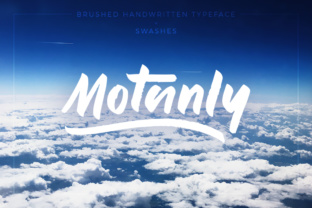
Typography is more than words on a screen—it's the first impression a brand makes, the mood of a quote, the personality of a headline. In a sea of digital perfection, there's a growing hunger for raw, human-driven design. That's where Motanly enters the picture. This isn't another generic sans-serif or script font pulled from a template. It's a handmade creation, drawn with a Copic M Brush on A4 paper sheets, then digitized to preserve every natural stroke and subtle imperfection. Whether you're a business owner refining your logo, a designer building a visual identity, or a creator looking for that one-of-a-kind headline font, Motanly brings a tactile authenticity that pure digital tools often miss.
The Origin of Motanly: From Brush Strokes to Digital Type
The story behind Motanly is rooted in the physical act of drawing. Each letter began as a deliberate stroke of a Copic M Brush—a tool known for its flexible tip and ability to create both thin and bold lines based on pressure. The artist worked on standard A4 paper, letting the brush interact with the texture of the sheet. This process gives Motanly a distinct, organic feel: slightly irregular edges, subtle ink pooling, and a rhythm that feels handwritten rather than mechanically generated. After scanning and careful vectorization, the font retains the warmth of its original medium while offering the convenience of a digital typeface. This backstory isn't just trivia—it directly influences how Motanly performs in real projects.
What Comes in the Box: Character Set and Swashes
Motanly isn't a massive family with dozens of weights. Instead, it focuses on quality and versatility within a compact package. The core font includes:
- Basic alphabet letters (uppercase and lowercase)
- Numbers and common punctuation marks
- A separate font containing 20 different and unique swashes
The swashes are where Motanly truly shines. These are decorative flourishes—think looping tails, elegant curls, and expressive underlines—that you can attach to initial or final letters. They're not randomized; each one is individually designed to flow naturally with the handwritten aesthetic. For example, a swash paired with a capital “M” might sweep outward with a controlled taper, while a “W” swash could add a graceful upward flick. Because the swashes are in a separate font, you can switch between them easily, mixing and matching to create custom treatments without breaking your workflow.
Who Benefits from Motanly? A Diverse Creative Audience
One of the most valuable aspects of Motanly is its accessibility to different skill levels and professions. You don't need to be a professional type designer to make it work. Here's how various groups can use it effectively:
- Small business owners and entrepreneurs – If you're launching a brand or refreshing an existing one, Motanly gives your logo a handmade charm that stands out from corporate, sterile designs. It pairs particularly well with natural, artisanal, or vintage themes.
- Graphic and branding designers – For client projects requiring a personal touch—like wedding invitations, boutique packaging, or café menus—Motanly offers a quick shortcut to authentic-looking script without drawing each letter from scratch.
- Content creators and social media managers – Use Motanly for quote cards, YouTube thumbnails, or Instagram story headers. The swashes add an extra layer of polish that elevates simple text into shareable art.
- Hobbyists and DIY enthusiasts – Whether you're making a personal blog header, a custom t-shirt design, or a scrapbook cover, the font's handwritten quality adds a personal, “made by me” feeling.
Real-World Applications: Where Motanly Works Best
While Motanly is versatile, it excels in specific contexts where its handmade origin can be fully appreciated. Below are practical scenarios where you might reach for this font:
- Logo design and branding – Because Motanly feels personal and approachable, it's ideal for businesses that want to convey trust, craftsmanship, or creativity. A coffee roaster, a pottery studio, or a freelance illustrator could use Motanly for a wordmark logo, often pairing it with a clean sans-serif for secondary text.
- Quotes and short statements – The font's rhythmic flow makes short lines of text visually interesting. Imagine a poster with the words “Create Boldly” written in Motanly, framed by one of its swashes sweeping underneath. The spacing and letter connections are designed to read smoothly at medium to large sizes.
- Headlines and titles – For blog headers, magazine covers, or print ads, Motanly can serve as a display face. It works best when sized at 24 points or larger; at small sizes, the brush texture might make details muddy, so reserve it for moments that demand attention.
- Packaging and product labels – Handmade fonts are a go-to for products that emphasize natural ingredients or artisanal methods. A jar of organic honey, a scented candle, or a handmade soap could use Motanly for the product name, with a simpler font for ingredient lists.
Strengths and Considerations: A Balanced Look
No font is perfect for every job, and understanding Motanly's strengths and limitations will help you decide if it's right for your project.
Strengths
- Authenticity – The brush-drawn origin gives Motanly a warmth that few digital-only fonts replicate. It doesn't look like a computer typed it, which is exactly what many modern brands want.
- Unique swashes – Having 20 distinct swashes in a separate font gives you creative control. You can build custom letter combinations that feel handcrafted and intentional.
- Ease of use – Once installed, you can access Motanly in any standard design software. The swashes are typed like regular characters (or via glyph panel), so no complicated scripting is needed.
- Focused character set – Unlike huge families that overwhelm you with options, Motanly gives you exactly what you need for display purposes, and nothing extra to clutter your workflow.
Considerations and limitations
- Not for body text – This is a display font, period. Its irregular stroke widths and decorative swashes make it hard to read in paragraphs or at small sizes (below 14-16 points). Use it for titles and highlights, not for blocks of information.
- Limited language support – The standard set covers basic Latin characters (A-Z, a-z, numbers, punctuation). Accented characters and extended Latin may be missing, so if you're designing for multilingual projects, check coverage first.
- Swash integration may take practice – While the swash font is separate and easy to toggle, getting the positioning right between a swash and its parent letter may require manual kerning or nudging in your design software. Don't expect automatic perfect alignment in every word processor.
- Single weight – Motanly likely comes in one weight (probably a standard brush script weight). If your project needs bold or light variations, you'll need to combine Motanly with another font for contrast.
How to Evaluate if Motanly Fits Your Project
Before you download or purchase Motanly, consider these practical checkpoints:
- Test at intended size – Open your design software, type a short phrase (like your brand name or a sample headline), and scale it to the actual size you plan to use. Check for legibility and how the swashes behave with neighboring letters.
- Pair it with a neutral counterpart – Because Motanly has a strong handmade personality, it pairs best with simple, clean fonts. Try combining it with a geometric sans-serif (like Helvetica, Montserrat, or similar) or a subdued serif for body text.
- Consider the medium – On screen, Motanly works well for web graphics, social media, and digital presentations. In print, ensure you use high-resolution settings (300 dpi) so the brush texture remains crisp. For large format signage, test a proof at full size to see if strokes hold up.
- Check swash usability – Open the swash font and type a few common letters (like “A”, “M”, “O”, “S”) to see which characters have accompanying flourishes. Not every letter may have a swash; the 20 swashes cover a curated selection. Be ready to adjust letter choices if needed.
Putting Motanly to Work: A Walkthrough Example
Imagine you're a freelancer named Jamie who runs a small pottery studio called “Earth & Kiln.” You want a logo that feels handcrafted and earthy. You open your design tool and type the name in Motanly. The “E” has a natural brush stroke that starts thick and tapers, while the “K” in “Kiln” offers a dynamic diagonal. You then switch to the swash font and add a floral-style under-sweep below “Earth & Kiln.” After adjusting the kerning slightly, the logo looks like it was painted on the side of a ceramic mug—exactly the impression you want. For business cards, you use Motanly only for the studio name, and a simple sans-serif for contact details. The result feels cohesive, personal, and professional.
This scenario captures Motanly's core value: it lets you bring the warmth of hand lettering into your projects without needing years of calligraphy practice. It's a tool that respects the art of brush strokes while embracing the efficiency of digital type.
For a closer look at the full character set and swash examples, you can explore the official Motanly specimen page (or your preferred font distributor). See the brush texture for yourself and imagine how it could shape your next creative piece.
Final Thoughts: When Handmade Makes the Message
In a design world that often leans toward perfection, Motanly stands out by celebrating the imperfect, the hand-drawn, the human. It won't replace a clean typeface for a legal document, and it shouldn't. But for logos, quotes, headlines, and branding that crave soul, Motanly delivers exactly what its name suggests—a motley (varied) expression of brush-driven typography. Whether you're a seasoned designer or a business owner taking a first step into visual identity, this font invites you to think of letters not just as characters, but as strokes of a brush dipped in intention.