Palma Nana: A Font Duo Built for Versatile, Expressive Design Work
When you browse font marketplaces, the term "font duo" appears frequently. Many pairs promise harmony but deliver one strong typeface and another that feels like an afterthought. Palma Nana is a different proposition. This font duo includes two deliberately crafted typefaces—Palma Nana Script and Palma Nana Sans—each capable of standing alone, yet designed to work in concert. For designers, marketers, and content creators who need flexibility without sacrificing consistency, Palma Nana warrants a closer look.
What Makes the Palma Nana Font Duo Notable
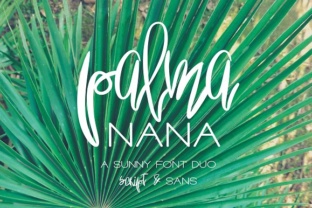
The core idea behind Palma Nana is complementary contrast. The duo pairs a quirky hand-drawn script with a thin sans serif. On paper, that sounds like a common combination. In practice, the execution matters. Palma Nana Script has a loose, human quality that avoids feeling forced or overly polished. Its irregular strokes and natural variation give it a tactile, approachable character. Palma Nana Sans, by contrast, is lean and understated. It does not compete with the script; it supports it.
What makes this pair worth discussing is the thoughtfulness behind the proportions. The script and sans share similar x-heights and baseline rhythms. This means when you set them together—say, a headline in the script and a subheading or body in the sans—the optical flow remains smooth. You do not get the jarring visual jump that often occurs when mixing fonts from different families.
Palma Nana Script: Character Without Clutter
Palma Nana Script is the more distinctive of the two. It is a hand-drawn script, but it does not lean into the overly decorative or fussy territory that limits many script fonts to wedding invitations and dessert menus. The letterforms have a slight bounce, with ascenders and descenders that feel natural rather than exaggerated. The quirky quality comes through in subtle inconsistencies—a loop that is a little wider here, a baseline that dips slightly there. These details give the typeface personality without making it illegible.
In practical terms, this script works well for medium-length headlines, pull quotes, branding elements, and any situation where you want a human touch. It is not ideal for long body text—the irregular rhythm becomes fatiguing at small sizes or in dense paragraphs. But for short, impactful lines, it delivers a warmth that many cleaner scripts lack.
Palma Nana Sans: Restraint as a Strength
Palma Nana Sans is a thin sans serif that could easily be dismissed as minimal, but that would miss the point. Its value lies in restraint. With a light stroke weight and generous letter spacing, this sans provides breathing room around the more expressive script. It does not demand attention. It frames and clarifies.
In extended text settings, Palma Nana Sans is comfortable to read at moderate sizes. The thin weight means it works best at display sizes or in short to medium-length passages rather than lengthy articles. For body copy in a print brochure or a website hero section, however, it holds up well. The simplicity of the sans also makes it practical for smaller UI elements, captions, labels, and supporting information where the script would feel out of place.
How the Two Typefaces Perform Together
The real test of any font duo is how the pair functions in a single project. Palma Nana shines in scenarios where you need a clear visual hierarchy. The script naturally draws the eye, so it works as the primary attention-grabber. The sans then steps in for secondary information without creating confusion or visual noise.
Consider a brand identity for a small-batch food product. The product name set in Palma Nana Script on the label feels artisanal and personal. The ingredient list, net weight, and nutritional information in Palma Nana Sans remain clean and readable. The contrast signals that this is a crafted product, but the information is still easy to parse. That balance is harder to achieve with many duos, where the script and sans feel like they belong to different projects.
For digital applications, the combination works similarly. A landing page for a creative service could use the script in the main heading and the sans for navigation, testimonials, and call-to-action buttons. The transition feels intentional rather than accidental. The consistency in proportion helps maintain visual cohesion across the page.
Quality and Design Considerations
From a technical standpoint, both typefaces in Palma Nana show attention to spacing and kerning. The script has enough contextual alternates to avoid the repetitive look that plagues some hand-drawn fonts. You will not see identical letter combinations repeating in a way that breaks the illusion of hand lettering. The sans, while simple, has clean curves and consistent stroke endings that hold up at various sizes.
One limitation worth noting: the thin weight of the sans means it can feel delicate. On low-resolution screens or at very small sizes, some detail may be lost. For print, this is less of an issue, but for digital use, consider the output medium. If your primary audience reads on mobile devices at small font sizes, you may need to pair the sans with a slightly heavier fallback or use it only at larger scales.
Who Benefits Most from Palma Nana
Palma Nana is not a one-size-fits-all solution, but it serves specific audiences well.
- Freelance designers and small studios working on brand identities, packaging, or social media graphics will find the duo versatile enough to handle multiple client types without needing to license multiple font families.
- Marketers and content creators who produce digital assets like landing pages, email headers, or promotional materials can use the script for visual impact and the sans for clarity.
- Bloggers and publishers who want a distinctive but readable look for headings and pull quotes, with a clean sans for body text in shorter posts or sidebars.
- Entrepreneurs and small business owners building their own brand assets can achieve a polished, professional look without hiring a designer for every piece of collateral. The duo provides a ready-made system.
- Educators and serious hobbyists creating worksheets, presentations, or instructional materials where you want to balance visual interest with readability.
Realistic Use Cases and Limitations
In my own evaluation, I tested Palma Nana across several mock scenarios. For a product packaging concept, the script held up well at larger sizes on the front label, while the sans handled the back panel with ingredients and instructions. The contrast created a clear visual hierarchy that made the product feel premium without being fussy.
For a multi-page brand guidelines document, the duo worked for headings and subheadings, but I would not recommend the sans for extensive body copy at small sizes. Readers may find the thin weight tiring over several pages. In that context, a standard body font may be a better choice. That is a realistic limitation: the sans is excellent for short to medium text, but it is not a workhorse for long-form reading.
Similarly, the script has a distinct personality that may not suit every brand. If you need a neutral, corporate, or highly formal tone, this script will feel out of place. It leans toward creative, artisanal, and approachable contexts. Before committing to the duo, consider whether the script’s character aligns with your brand voice or project goals.
Long-Term Value and Practical Recommendations
For designers and content creators who regularly work on projects requiring a personal or handcrafted feel, Palma Nana offers good long-term value. The duo covers a range of needs within a single purchase. You avoid the cost and compatibility issues of mixing fonts from different foundries.
To get the most out of it, plan your hierarchy early. Use the script sparingly—it works best as an accent or hero element. Let the sans carry most of the informational load. When setting type, pay attention to size relationships. The script tends to read larger than its point size suggests, so adjust accordingly to maintain balance.
If your workflow involves frequent social media graphics, short-form web content, or printed materials like flyers and small catalogs, this duo can become a reliable part of your toolkit. For long-form publishing, data-heavy reports, or highly formal communications, you may want to look for a pairing with more robust text options.
Final Assessment: A Thoughtful Duo for Targeted Use
Palma Nana does what a good font duo should: it gives you two distinct voices that speak the same language. The script brings warmth and character; the sans provides structure and clarity. Neither feels like an afterthought. The pair is not a catch-all solution for every project, but for the right audience—anyone working on creative, branded, or content-driven work that benefits from a personal touch—it delivers genuine utility. If your projects demand both expression and restraint, Palma Nana is worth adding to your shortlist.