Berlinsa Script: When Smooth Characters Redefine Handwritten Typography
The quiet revolution in typography often goes unnoticed. While bold display faces and rigid sans-serifs dominate headlines, a different kind of transformation is happening in the spaces between words — in signatures, in headers, in the small moments where a brand or a creator chooses to sound human. Berlinsa Script belongs to that quiet revolution. It is not merely a font; it is a deliberate piece of design logic disguised as effortless handwriting. Understanding what makes a modern handwritten script like Berlinsa work requires looking beyond its appearance and into the mechanics of how its characters behave, connect, and shape the act of reading.
When we say a script has "smooth character," we are not just talking about aesthetics. We are talking about the invisible math of curves, the tension between consistency and variation, and the way one letter flows into the next without tripping the eye. Berlinsa brings that smoothness forward as a primary functional feature, and that changes how designers, educators, and business owners think about handwritten type in practical settings.
The Architecture of Smoothness: What Makes a Script Flow
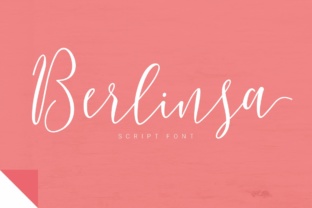
Every handwritten script faces a fundamental tension. It must look natural, as if drawn by a human hand, yet it must also perform predictably across digital environments. Berlinsa Script resolves this tension through careful control of its stroke geometry. The characters are constructed with consistent pen pressure simulation — thick downstrokes and lighter upstrokes create a rhythm that feels familiar and comfortable to the reader.
What distinguishes Berlinsa from older script fonts is how it handles joins. Many handwritten fonts force connections between letters that feel mechanical. Berlinsa uses what designers call "contextual alternates" — the script automatically adjusts the shape of a letter based on what comes before and after it. This means the "a" that follows an "l" looks different from the "a" that follows a "c." That variation is subtle, but it is the difference between a font that looks typed and one that looks written.
- Consistent stroke weight — not too heavy, not too thin, optimized for body text at moderate sizes and display use at larger scales.
- Natural slant angle — Berlinsa maintains a uniform rightward incline that does not fatigue the eye over long passages.
- Balanced ascenders and descenders — the loops and tails of letters like "g," "y," and "f" are long enough to feel expressive but short enough to prevent line-height issues.
- Open counters — the enclosed spaces inside letters like "e" and "a" are kept wide, improving legibility at smaller sizes.
These features collectively give Berlinsa Script a reading experience that feels closer to a handwritten note than a typeset paragraph. For researchers studying readability and consumer behavior, this has implications. Studies suggest that handwritten-style fonts can increase perceived warmth and authenticity in branding. Berlinsa's smoothness removes the friction that usually stops readers from engaging with a script font beyond a headline.
Where Smooth Characters Meet Real Workflows
A font collection is only as useful as its ability to adapt to real projects. Berlinsa and Berlinsa Script together form a paired system — one offering a clean, modern sans-serif companion, and the other delivering the handwritten personality. This pairing is where practical value emerges for professionals.
Consider a business owner designing packaging for an artisanal product. A solo script font might feel whimsical or incomplete, but Berlinsa Script paired with its sans-serif counterpart creates a hierarchy. The script can carry the product name, while the sans-serif handles ingredients, instructions, and regulatory text. The visual transition is smooth because both share underlying structural proportions — the x-height, the spacing rhythm, and the overall color on the page align.
Use Case: Digital Product Interfaces
Most handwritten scripts fail in UI design because they lack legibility at small sizes or create accessibility issues. Berlinsa Script holds up better in this context. Its open letterforms and consistent spacing make it usable for short interface labels, onboarding screens, or personalized dashboard elements. A hobbyist building a custom app theme can use Berlinsa Script for greeting messages or notification headers without sacrificing readability.
Use Case: Educational Materials
Educators and content creators often look for fonts that feel approachable. Berlinsa Script works well for worksheet headers, lesson titles, and visual aids aimed at younger learners. The smooth character shapes reduce visual noise, helping students focus on content rather than decoding letterforms. For researchers studying typography in learning environments, Berlinsa provides a consistent variable to test against more traditional handwritten fonts.
Use Case: Brand Identity Systems
Brands that want to project authenticity — cafes, creative studios, wellness products, boutique services — benefit from the warmth of a handwritten script. Berlinsa Script offers enough stylistic range to serve as a primary brand typeface without needing constant support from decorative elements. Its smoothness means it works across business cards, website headers, social media graphics, and physical signage with minimal adjustment.
The Subtle Power of Character Variation
One of the most discussed features in modern script typography is character variation, often called "stylistic sets" or "swashes." Berlinsa Script includes multiple alternate versions of key letters, but unlike some scripts that use variation as decoration, Berlinsa integrates alternates as functional tools.
For example, the lowercase "r" in Berlinsa has two forms: a standard version that connects naturally to the next letter, and a swashed form that extends slightly below the baseline for a flourish at the end of a word. A designer working on a wedding invitation or a certificate can use the swashed alternates selectively — not everywhere, but at the edges of lines or for emphasis. This prevents the "overdesigned" look that plagues scripts with too many flourishes.
Creators who work with long-form handwritten text appreciate that Berlinsa does not force variation. The default setting produces a clean, readable line. Alternates are available as optional extras, which means a designer can decide how much personality a project needs. That level of control is rare in handwritten font collections, and it makes Berlinsa suitable for both professional studio work and personal hobbyist projects.
Performance Considerations Across Mediums
Any discussion of a modern handwritten script must address how it performs in different environments. Berlinsa Script is designed with digital rendering in mind, but its behavior in print is equally strong.
- Screen rendering: At standard web sizes (16–24px), Berlinsa maintains legibility because its thin strokes do not disappear and its thick strokes do not bleed. The hinting is optimized for modern screens.
- Print output: At larger sizes (36px and above), the script shows its full character. The stroke contrast becomes more pronounced, giving printed materials a tactile, ink-like feel.
- Mobile displays: The open counters and balanced letter width help Berlinsa perform on small screens where many scripts become cramped or unreadable.
- Variable environments: Because Berlinsa is available as part of a collection that includes the sans-serif companion, designers can maintain visual consistency across responsive layouts, scaling the script for headers and the sans-serif for body text.
For developers and content managers, this means fewer compromise decisions. You do not have to abandon the handwritten aesthetic when moving from a hero section to a product description. The collection works as a system, and Berlinsa plays the supporting role while Berlinsa Script takes the lead in expressive moments.
The Broader Context: Why Handwritten Scripts Matter Now
There is a reason why modern handwritten scripts are experiencing a resurgence in professional design. As digital interfaces become more uniform and predictable, the desire for human texture grows. A font like Berlinsa Script provides that texture without introducing chaos. It is a curated version of handwriting — smoother than the real thing, more consistent, but still carrying the emotional signals that connect readers to content.
Researchers studying visual communication note that handwritten typography triggers different cognitive processing than machine-set type. Readers attribute more personality, sincerity, and effort to handwritten text. Berlinsa Script amplifies these effects because its smooth characters do not distract. The reader is not forced to decode awkward joins or inconsistent slant angles. Instead, the script disappears into the message it carries.
Business owners and marketers can leverage this in practical ways. A handwritten call-to-action button, a signature-style logo, or a personalized email header using Berlinsa Script can increase engagement metrics simply because the visual feels less automated. For educators, the same principle applies to materials that need to feel encouraging rather than institutional.
Understanding the Collection: Berlinsa and Berlinsa Script as a System
Treating Berlinsa (the sans-serif) and Berlinsa Script as separate fonts misses the point of the collection. They are designed as a unified system with shared anatomical DNA. The sans-serif provides the structural framework — geometric, clean, neutral. The script provides the expressive layer — fluid, personal, warm.
When used together, they create a typographic voice that is rare in font collections. Most foundries offer script fonts that feel disconnected from their sans-serif companions. Berlinsa avoids this by matching proportions, weight distribution, and spacing rhythm across both faces. A designer can set a headline in Berlinsa Script and a subhead in Berlinsa and experience a seamless visual transition.
This makes the collection especially valuable for creators who are not typography specialists. A hobbyist building a personal website, a small business owner designing a logo, or an educator preparing course materials can use both fonts together with confidence that they will look cohesive. The system does the heavy lifting of visual harmony.
Real Observations from Practice
In practice, Berlinsa Script reveals its strengths most clearly in projects that require a balance between professionalism and personality. A coffee shop menu, for instance, benefits from the script's warmth on item names while the sans-serif handles prices and descriptions. A wedding website can use the script for the couple's names and the sans-serif for logistical details. A researcher's presentation can use the script for pull quotes and the sans-serif for data labels.
The smooth character of Berlinsa Script also reduces the need for manual kerning adjustments. Because the letter joins are designed with contextual awareness, common problem pairs — like "LA," "To," or "Ve" — flow naturally without spacing gaps. Designers who have spent hours adjusting kerning in other script fonts will appreciate this efficiency.
One observation that emerges from extended use is that Berlinsa Script works particularly well in monochromatic settings. Without color to add interest, the script's stroke contrast and letter variation carry the visual weight. This makes it a strong choice for black-and-white print pieces, digital publications with minimal color palettes, or accessibility-focused designs where color cannot be relied upon for emphasis.
What Makes a Script Font Truly Modern
The term "modern handwritten script" gets used loosely across font marketplaces. A truly modern script must solve problems that older scripts ignore. It must handle extended character sets, including accented letters for multilingual use. It must include ligatures that actually improve readability rather than just adding decoration. It must perform across operating systems and browsers without breaking.
Berlinsa Script meets these criteria. It includes support for Western, Central European, and Nordic languages. Its ligatures are contextually programmed, meaning they appear only where they improve flow. The font files are optimized for web use with proper hinting and subsetting options. For developers and content teams, these technical details determine whether a font is usable at scale or relegated to one-off decorative use.
Additionally, Berlinsa Script's character set includes punctuation, numerals, and symbols that match the handwritten aesthetic. A common frustration with script fonts is that numbers and symbols look disconnected from the letters. Berlinsa solves this by designing numerals with the same stroke logic as the alphabet, creating a cohesive numeric set for pricing, dates, and data.
Practical Guidance for First-Time Users
For someone adding Berlinsa and Berlinsa Script to their font collection for the first time, a few practical considerations can improve the experience. First, avoid using the script at very small sizes in digital environments. Below 14px, even the smoothest script loses legibility. Reserve the script for headings, short phrases, and display purposes, and use the sans-serif companion for body text.
Second, take advantage of stylistic alternates selectively. A common mistake with scripts that offer multiple character forms is using too many alternates at once, which creates visual chaos. Berlinsa Script's alternates are designed for occasional emphasis — a swash on the first letter of a paragraph, a descender variation on the last word of a line. Used sparingly, they elevate the design without overwhelming it.
Third, pay attention to line spacing. Handwritten scripts often need slightly more line-height than sans-serif or serif fonts because of their ascenders and descenders. Berlinsa Script's balanced proportions help here, but adding 10–15% extra line spacing in CSS or print layout settings will preserve readability and prevent collisions between lines.
Finally, test the font in context. A common workflow is to set the headline in Berlinsa Script, the subhead in Berlinsa, and then evaluate how they interact at different sizes. Adjust weight contrast if needed — the script's natural weight may feel heavier or lighter than the sans-serif depending on the specific cut. Most projects find a natural balance at the regular or medium weight of the sans-serif paired with the standard weight of the script.
The Larger Picture: A Font That Invites Use
What ultimately makes Berlinsa and Berlinsa Script a notable addition to any font collection is not any single feature, but the way the fonts invite use. They do not demand expertise or specialized design knowledge. A business owner, a creator, an educator, a researcher, or a hobbyist can open the collection and find immediate value. The smooth character of the script reduces the barrier to entry for anyone who wants to communicate with warmth and personality.
Typography is often technical and inaccessible. Berlinsa Script manages to be the opposite — it is a tool that feels personal from the moment you set your first word. That is rare. That is what makes it worth adding to your collection, not as a specialty font pulled out for rare occasions, but as a daily driver for the moments when your message needs a human touch.