Naishila Script: A Practical Evaluation of a Handwritten Multi-Use Font Family
When evaluating a new typeface for a project, it helps to look beyond surface aesthetics and consider how a font performs across different contexts, how it integrates with your workflow, and whether it genuinely solves a design problem. Naishila Script is one such typeface that invites careful consideration. It is a handwritten multi-use font, but it is also part of a larger family that includes distinct variants and a suite of alternate characters. This article provides a balanced, practical evaluation of Naishila Script to help you determine whether it aligns with your specific goals, project requirements, and design preferences. We will explore what makes it distinctive, where it excels, where it may fall short, and how to make an informed decision.
Understanding the Naishila Font Family: Core Variants and Features
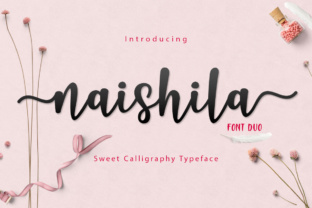
Naishila Script sits at the center of a three-font family designed to offer flexibility while maintaining a cohesive handwritten aesthetic. The family includes Naishila Script, Naishila Dancing Script, and Naishila Caps Regular. Each variant serves a different typographic role, but they share a common DNA in their hand-drawn, organic character shapes. This is not a neutral, mechanical typeface. It carries the imperfections, rhythm, and warmth of natural handwriting, making it suitable for projects that call for a personal, approachable, or artistic tone.
One of the most notable features of both Naishila Script and Naishila Dancing Script is the inclusion of a range of alternate characters encoded via the Private Use Area (PUA). These alternates include stunning swashes, extended flourishes, and stylistic variations that allow you to customize the look of your text beyond the default character set. For designers working in software that supports PUA encoding—such as Adobe Illustrator, InDesign, Photoshop, or Affinity applications—this opens up a layer of typographic control that can elevate a layout from standard to distinctive.
Naishila Script
Naishila Script is the core font in the family. It features a flowing, connected handwriting style with moderate stroke contrast. The letters are neither overly condensed nor excessively wide, striking a balance that works well for medium-length text settings, pull quotes, headings, and branding elements. The inclusion of PUA alternate characters gives you the ability to swap in swashed versions of specific letters, typically at the beginning or end of words, to create a more ornate or expressive look.
Naishila Dancing Script
Naishila Dancing Script takes the handwritten concept in a livelier direction. The strokes are more playful, with increased variation in letter height and baseline drift. This variant mimics a more casual, energetic handwriting style. It retains the PUA alternate characters and swashes, but the overall impression is less formal than Naishila Script. This makes it a strong choice for projects where you want to convey movement, joy, or informality.
Naishila Caps Regular
Naishila Caps Regular provides an all-caps option for the family. It is designed to complement both script variants, offering a consistent hand-drawn feel in a capital-letter-only format. This is useful for acronyms, short headers, labels, or any situation where you need uppercase text that does not clash with the script fonts. It does not include swashes in the same way as the script versions, but it maintains the same design language.
Together, these three fonts give you a small but versatile ecosystem. You can mix and match them to create hierarchy, contrast, and visual interest within a single project, all while keeping a coherent handwritten character.
Why Designers Consider Naishila Script: Key Motivations
People researching Naishila Script typically fall into a few distinct categories. Understanding these motivations can help you clarify whether this font is right for you.
- Desire for handwritten authenticity – Many designers are looking for a typeface that genuinely looks like it was written by hand, without the stiffness of some script fonts that feel too digitally perfect. Naishila Script delivers a natural, imperfect quality that can make a design feel more human and less corporate.
- Need for versatility across applications – Because the family includes three distinct variants, it can serve different roles within a single project. You might use Naishila Script for headlines, Naishila Dancing Script for subheadings or accent text, and Naishila Caps Regular for labels or short callouts. This reduces the need to source multiple unrelated fonts.
- Interest in PUA alternate characters and swashes – The built-in alternates and swashes are a significant draw. They allow you to customize letterforms without needing to manually edit paths or rely on third-party swash sets. For anyone who values typographic detail, this feature adds genuine utility.
- Search for a multi-use handwritten font – The phrase "multi-use" in the font description is important. It signals that the typeface is not narrowly designed for a single context, such as wedding invitations or logo work, but is intended to function across branding, packaging, social media, print, and digital applications.
Benefits of Choosing Naishila Script
When Naishila Script is a good match for your project, it brings several practical advantages.
Expressive and approachable character. Because the typeface retains the irregularities of natural handwriting, it can make a brand or project feel more relatable. In contexts where you want to reduce formality and increase warmth, Naishila Script performs well. It avoids the sterile uniformity of many sans-serif or geometric script fonts.
Built-in customization through alternates. The PUA-encoded alternates and swashes give you a degree of typographic flexibility that is usually only available in premium or highly specialized fonts. You can create unique wordmarks, add decorative flourishes, or avoid repeating the same letterform too often in a block of text. This is particularly valuable for logo design, packaging, and other display applications.
Cohesive family structure. Having three compatible variants means you can build a typographic hierarchy without leaving the family. The consistency in stroke weight, angle, and overall feel across the three fonts reduces the risk of visual conflict. This is especially helpful for small studios or independent designers who do not have the time to test numerous font pairings.
Decent character set coverage. Naishila Script and its variants include standard Latin characters, numerals, punctuation, and a selection of accented characters. This makes them usable for many Western European languages, which broadens their applicability for international projects.
Tradeoffs and Considerations to Keep in Mind
No typeface is perfect for every situation, and Naishila Script has characteristics that may not work for all users or all projects. Being aware of these tradeoffs helps you make a more informed choice.
PUA encoding requires compatible software and knowledge. To access the alternate characters and swashes, you need to use applications that support PUA encoding and provide a glyph panel or similar interface. If you work primarily in web-based design tools, simple word processors, or older software, you may not be able to access these features easily. Additionally, you need to know how to navigate a glyph panel and insert alternates manually. This adds a step to your workflow.
Handwritten style may not suit formal or high-legibility contexts. The organic, variable nature of Naishila Script means it is not ideal for body text in long documents, especially at small sizes. Legibility can suffer in dense paragraphs, and the decorative swashes may interfere with readability when overused. For formal corporate reports, legal documents, or any context where clarity and neutrality are paramount, a more standard serif or sans-serif typeface would be a better choice.
Legibility at very small sizes can be inconsistent. Like many script fonts, Naishila Script relies on fine details and varying stroke widths. At very small point sizes—below roughly 12 points—some characters may become difficult to distinguish, especially in the more playful Dancing Script variant. If your project requires text to be readable at small sizes (e.g., fine print, captions, or mobile interfaces), you will need to test the font carefully.
Swashes and alternates require restraint. The availability of stunning swashes is a benefit, but it also introduces a risk. Overusing swashes or applying them to every word can quickly make a layout feel cluttered, gaudy, or unprofessional. Effective use of Naishila Script requires a disciplined approach: use alternates sparingly for emphasis, not as a default setting.
Not a replacement for a full display or body text family. The Naishila family is small (3 fonts). It does not include multiple weights, italics (beyond the existing script styles), or condensed/expanded variants. If your project requires a wide range of typographic weights or styles, you may need to supplement this family with other fonts.
Situations Where Naishila Script Is a Strong Fit
Based on its characteristics, Naishila Script works particularly well in the following contexts:
- Branding and logo design – The handwritten quality and available swashes make it suitable for creating distinctive wordmarks, especially for businesses in creative, lifestyle, hospitality, or artisanal sectors.
- Packaging and product labels – The warmth and approachability of the typeface can enhance products that want to convey handcrafted, natural, or premium qualities.
- Invitations, stationery, and event materials – The script variants lend themselves well to formal or semi-formal events where a personal touch is desired.
- Social media graphics and web headers – For short, attention-grabbing text, the expressiveness of Naishila Script can help a design stand out in feeds or hero sections.
- Creative projects and editorial accent text – Pull quotes, section headings, or decorative elements in magazines, blogs, or portfolios can benefit from its organic character.
- Projects requiring a cohesive handwritten system – If you need to use handwritten text across multiple contexts (headlines, subheadings, labels), having all three variants in one family simplifies the design process.
When Alternatives May Be Worth Considering
There are also clear situations where Naishila Script is not the best choice, and you should evaluate other options.
- Professional body text in long documents – For articles, reports, books, or any extended reading, a neutral serif or sans-serif typeface will provide better legibility and reduce reader fatigue.
- High-legibility or accessibility-focused projects – If your audience includes people with visual impairments or reading difficulties, a script font is likely not appropriate, regardless of its quality. Use a clear, straightforward typeface with good character distinction.
- Corporate or institutional branding that requires a neutral tone – Banks, law firms, government agencies, and similar entities typically need typefaces that project stability, professionalism, and objectivity. Naishila Script's handwritten informality would likely feel out of place.
- Minimalist or modern design systems – If your project is built around clean, geometric, or minimal aesthetics, a script font may introduce an incompatible level of ornamentation. A simple sans-serif or clean serif would maintain the intended visual language.
- Projects requiring extensive language coverage – Naishila Script covers Western European languages, but if you need support for Central or Eastern European languages, Cyrillic, Greek, or non-Latin scripts, you will need to look elsewhere.
- Web-only projects where PUA access is limited – If you are working exclusively in web design and cannot easily embed PUA alternates or rely on CSS glyph substitution, you may not be able to use the font's most distinctive features. The standard characters alone are still usable, but you lose the customization that makes the font special.
Practical Decision-Making Insights for Selecting Naishila Script
To determine whether Naishila Script is right for you, consider the following practical steps:
- Test the font in your actual workflow. Download a trial version, if available, and use it in the software you typically work with. Check how the PUA alternates appear in your application, and test legibility at the sizes you plan to use.
- Define your project's typographic hierarchy. Identify every role text will play in your design. Will you need multiple weights? Do you need a sans-serif companion for body copy? If your hierarchy requires more than three roles (e.g., headline, subhead, body, caption, accent), you may need to pair Naishila Script with another typeface.
- Evaluate the audience and context. Consider who will see your design and in what setting. A script font that works for a boutique bakery may not work for a financial advisory firm, even if the design is otherwise strong.
- Plan your use of alternates and swashes. Decide whether you will manually insert alternates via the glyph panel or use software that supports stylistic sets. Factor this extra time into your project schedule. If speed is critical, a font with fewer manual customization steps might be more practical.
- Consider font pairing requirements. Because Naishila Script has a distinct personality, it pairs best with neutral, understated fonts. A simple sans-serif like a geometric or humanist style usually works well. Avoid pairing it with another highly decorative script or display font, as the result can be visually chaotic.
In summary, Naishila Script offers a well-crafted handwritten quality with the added value of a small but coherent family and PUA-encoded alternates. It is best suited for projects where warmth, expressiveness, and typographic customization are priorities, and where the context allows for a less formal tone. For designers who need a strict, neutral, or highly legible typeface, or who work in environments without PUA support, alternatives will likely serve better. By weighing these factors against your specific project requirements, you can decide whether Naishila Script aligns with your goals—or whether a different choice is the more practical path forward.