Nicolaus Kesler: Bringing 15th-Century Basel Printing into Modern Design
If you have ever seen a printed page from the late 1400s, you know how strangely familiar it feels. The letters are crisp, the spacing is deliberate, and even if you cannot read the Latin or German text, the page itself looks like a piece of art. That effect did not happen by accident. It came from craftsmen like Nicolaus Kesler, a printer of incunabula who worked in Basel, Switzerland, during the earliest decades of movable type. He produced ecclesiastical works, Bibles, and an edition of the Golden Legend, and the typefaces he used were built for both beauty and clarity. Now, one of those typefaces has been revived for modern use. The font that carries his name gives you the look of late-1400s Basel printing, but it also brings over 900 glyphs, a handful of authentic historical abbreviations, and even a voided outlined version. This article is about where that font fits into the actual work you do every day.
What Nicolaus Kesler Actually Is
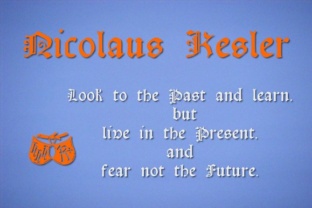
Nicolaus Kesler is a digital typeface inspired by the work of the historical printer of the same name. The original Kesler ran a shop in Basel at a time when printing was still a new and evolving craft. His output was mostly religious: Bibles, service books, and the Golden Legend, a collection of saints' lives that was one of the most popular books of the era. The typeface that now bears his name is not a direct scan of his original punches. It is a modern interpretation that preserves the essential character of his work while expanding it into a usable digital font. You get the sharp, angular serifs, the uneven stroke weights that give early printed pages their texture, and a general feeling of handcrafted precision. At the same time, the font has been cleaned up for screen rendering and extended to cover modern character sets.
The key feature that sets Nicolaus Kesler apart from many historical revival fonts is its readability. A lot of blackletter or incunabula-style typefaces are beautiful but exhausting to read beyond a headline. This one manages to be fancy without sacrificing clarity. That makes it a rare tool for someone who wants the aesthetic of early printing without driving your audience away from the text itself.
Where and Why You Might Use Nicolaus Kesler
The practical question is not whether the font looks good. It does. The question is where it helps you get something done. Here are several real situations where Nicolaus Kesler becomes a useful tool rather than just a decorative choice.
Book Covers and Interior Layouts for Historical or Thematic Content
If you are publishing anything with a historical, ecclesiastical, or medieval theme, this font is an obvious fit. A paperback edition of a translated medieval text, a reprinted classic, or even a modern novel set in a monastery or a fifteenth-century town will benefit from a typeface that places the reader in the right mental space. You can use Nicolaus Kesler for the chapter titles, the drop caps, or the running headers. For the body text, you might pair it with a simpler serif, but for short passages, the font itself is legible enough to work at book sizes. The voided outlined version is particularly useful for section dividers, part titles, or decorative initials that break up long stretches of text.
Invitations, Certificates, and Formal Announcements
Wedding invitations, graduation certificates, award announcements, and event programs benefit from a font that signals formality without feeling stiff. Nicolaus Kesler works well here because its historical associations bring a sense of ceremony. A wedding invitation printed in this font feels like it carries weight, especially if the event has a traditional or liturgical element. The outlined version can be used for borders, monograms, or the couple's initials at the top of the invite. For certificates, the font's elegance makes the document feel official, but its readability prevents it from looking like a museum reproduction. You get gravitas without coldness.
Packaging for Artisan, Heritage, or Handcrafted Products
Small businesses that produce handmade goods, small-batch foods, or heritage-style products can use Nicolaus Kesler on labels, packaging inserts, and hang tags. If you are selling artisanal honey, craft beer with a traditional recipe, handmade soap, or leather goods, the font connects your product to the idea of craftsmanship. It suggests that your process is careful, your standards are high, and your product has roots in older traditions. The font does not look like a generic script or a corporate sans-serif, so it helps your packaging stand out on a shelf or in an online photo. The outlined version works well for subtle watermark-style branding on the back of a package or on tissue paper.
Branding for Churches, Schools, and Cultural Institutions
Organizations that want to signal tradition and stability can use Nicolaus Kesler in their logo, stationery, or website headers. A church that dates back to the nineteenth century, a private school with a classical curriculum, or a historical society will find that the font communicates who they are without needing extra explanation. It works on a Sunday bulletin, a fundraising letter, or a donor plaque. The font's historical abbreviations are a nice touch if you need to replicate the look of older documents for a museum exhibit or a historical marker. Just be aware that those abbreviations are not standard modern shorthand, so use them only where the context is appropriate.
Digital Content Where Visual Tone Matters
Bloggers, newsletter writers, and social media content creators who cover history, literature, religion, or traditional crafts can use Nicolaus Kesler for title cards, quote graphics, and headers. A YouTube video about medieval manuscript illumination gets an instant visual hook if the title uses this font. A Substack newsletter about early printing or biblical scholarship gains credibility when the header image matches the content. The font's readability on screen is good enough for short blocks of text, so a pull quote or a section heading in a blog post can be set directly in Nicolaus Kesler without worrying that readers will struggle to parse it.
What to Consider Before Using Nicolaus Kesler
No font is a universal solution, and Nicolaus Kesler has its own set of practical considerations. Knowing these upfront will save you time and keep your project looking intentional rather than mismatched.
Pair it carefully with other typefaces. Because Nicolaus Kesler carries a strong historical character, it does not pair well with every modern font. You usually want a clean, neutral serif or a simple sans-serif for body text. Something like a geometric sans or a low-contrast old-style serif will let Kesler do the decorative work without clashing. Avoid pairing it with other ornate fonts. The result is usually chaos.
Watch your point size. The font's intricate details and variable stroke widths mean that at very small sizes, some of the nuance disappears and the letters can become muddy. For printed materials, keep it at 12 points or larger for body text. For display use, you can go smaller on a screen if the resolution is high, but test it. The outlined version is even more sensitive to size because the voids fill in at small scales.
Use the historical abbreviations sparingly. The font includes a few common abbreviations from late medieval printing, like the Tironian sign for "et" or the nasal contraction mark. These are authentic and interesting, but your modern audience may not recognize them. Use them only in contexts where the audience is expected to have some familiarity with historical typography, or where you can afford to have the abbreviation be a subtle detail rather than a critical piece of information. If the meaning matters, spell it out.
Consider your medium. This font was originally designed for ink on paper. The digital version has been optimized, but it still works best in situations where you can control the rendering environment. If you are using it on a website, test it on different browsers and operating systems. Some rendering engines handle the fine serifs better than others. For print, the font is excellent, especially on paper with some texture. A smooth coated stock can make it look slightly too clean, so consider using an uncoated or lightly textured paper to bring out the historical character.
Mind your audience's expectations. If you are designing for a general consumer audience, Nicolaus Kesler may read as either "old-timey" or "formal." That is fine if those are the tones you want. But if your product or message is supposed to feel cutting-edge, casual, or minimalist, this font will work against you. Save it for projects where tradition, craftsmanship, or ceremony is part of the value you are offering.
Practical Scenarios from Different Users
A blogger who writes about rare books and early printing can use Nicolaus Kesler for her site header and for the pull quotes in her weekly posts. The font becomes part of her brand identity. Readers who know the history of printing will notice the reference, and those who do not will still absorb the scholarly tone it sets.
A small business owner who makes custom leather journals can print the product name and a brief description on the inside cover using the outlined version of the font. It gives the journal a bespoke feel without adding cost to production. Customers perceive the product as more authentic and carefully made.
A wedding planner designing invitation suites for couples who are getting married in a historic chapel or a cathedral can offer Nicolaus Kesler as one of the typeface options. It pairs well with classic floral motifs and gold foil stamping. The couple gets an invitation that feels timeless without looking like a generic calligraphy font.
A publisher producing a new edition of Thomas à Kempis's The Imitation of Christ can use Nicolaus Kesler for the title page and the chapter openings. The body text can be set in a readable serif, but the key visual moments draw directly from the printer who produced similar devotional works centuries ago. The book feels connected to its own history.
Why the Font Works for Everyday Creators
Nicolaus Kesler is not a novelty font. It is a tool that solves a specific problem: how to make something look historically grounded without sacrificing modern readability. That combination is harder to find than you might expect. Many historical revivals are either too faithful to the original, which kills legibility, or too sanitized, which loses the character. This font sits in a usable middle ground. It has over 900 glyphs, which means it covers accented characters, ligatures, and punctuation for most European languages. The included abbreviations and the voided outlined version give you extra options without forcing you to buy additional weights or styles.
If you are a designer, a small business owner, a publisher, or a content creator who works with material that benefits from a traditional, elegant, or authoritative visual tone, Nicolaus Kesler deserves a place in your font library. It is not for every project, but when the project calls for it, nothing else will do quite the same job.