Lion of Antwerp: A Typeface Built on 15th-Century Craftsmanship
If you have ever wished for a font that brings genuine historical character to modern projects without feeling like a costume, Lion of Antwerp deserves your attention. This typeface is drawn directly from the printed output of Gerard Leeu, a Dutch printer who worked in Gouda and later Antwerp, where his life ended abruptly in 1492 following an altercation with a staff member. That may sound grim, but Leeu left behind something remarkable: a body of work that captures a pivotal moment in typographic history. Lion of Antwerp translates that heritage into a practical, usable font for today.
The name itself is a nod to Leeu’s surname, which means lion in Dutch, and to the city where he met his fate. It speaks directly to the font’s character—bold, dignified, and just a little bit fierce. This is not another clean, neutral serif. It has texture, warmth, and a distinctly human quality that feels like a conversation across centuries.
What Makes Lion of Antwerp Stand Out
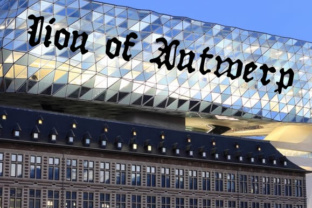
Lion of Antwerp is a display serif with roots in early printing, but do not mistake that for a lack of versatility. Its visual personality strikes a careful balance between the roughness of hand-set type and the consistency modern projects require. You get irregular letterforms that feel alive—slightly uneven stroke weights, gentle quirks in the serifs, and a rhythm that pulls the eye along naturally rather than forcing it into rigid geometric patterns.
The font comes in both TTF and OTF formats, with regular and bold weights each fully mapped. Nearly 600 defined characters cover a broad range of Latin-based languages, special punctuation, ligatures, and alternate glyphs. That means you are not stuck with a bare-bones character set. Whether you are setting headlines in English, French, German, Dutch, or Spanish, the coverage holds up.
In regular weight, Lion of Antwerp reads with a warm, almost hand-drawn quality. The bold weight, predictably, carries more weight—literally and visually. It commands attention without shouting. Both weights share the same underlying structure, so pairing them in a single layout creates a natural hierarchy without clashing.
Where Lion of Antwerp Shines in Real Projects
The most obvious place to use this font is editorial design. Book covers, magazine spreads, and long-form articles benefit from its readable, character-rich letterforms. It works especially well for historical content, literary projects, or any piece that wants to evoke craftsmanship and tradition without looking dusty. Think of a book on Renaissance history, a limited-edition poetry collection, or a brand that wants to communicate heritage and permanence.
Packaging design is another strong application. Lion of Antwerp brings a handcrafted feel to labels for specialty food, wine, spirits, or artisan goods. A bold-weight wordmark on a dark label can look striking next to a clean sans serif for nutritional information or ingredients. The contrast works because the serif carries visual weight while the sans serif handles the functional details without competition.
For branding and logo design, this font offers something many modern serifs lack: genuine personality. A logo set in Lion of Antwerp immediately signals that the business values tradition, quality, and attention to detail. It is not right for every brand, but for a craft brewery, a heritage hotel, a publishing house, or a design studio with a classic bent, it can be the foundation of a memorable identity.
Social media graphics and web design might seem like unlikely territory for a 15th-century-inspired typeface, but used sparingly, it creates instant contrast. A headline in Lion of Antwerp against a minimal sans serif body text draws the eye and sets a tone that stands out in crowded feeds. The key is restraint—use it for hero text or key calls to action rather than entire paragraphs on screen.
How This Font Influences Readability and Brand Perception
Readability in a display serif is different from readability in a text serif. Lion of Antwerp is not designed for dense body copy at small sizes—its charm lies in larger settings where the letterform details are visible. At 18 points and above, the font remains clear and inviting. The generous x-height helps, and the open counters keep letters distinct even in bold weight.
Visual hierarchy becomes intuitive with two weights. Use regular for subheadings, pull quotes, or author names, and bold for main headlines. The difference is pronounced enough to create clear levels of importance without needing a third weight. If you need more nuance, consider tracking adjustments or size changes rather than reaching for a weight that doesn’t exist.
Brand perception benefits enormously from a font with a story. When you choose Lion of Antwerp, you are implicitly telling your audience that you value history, authenticity, and craftsmanship. That message resonates with customers who are tired of generic, mass-produced visuals. In a marketplace saturated with slick, samey design, a typeface with genuine roots stands out. It suggests that you have taken the time to choose something with meaning—and that impression carries over to your product or service.
Consistency across touchpoints is also easier than you might expect from a display font. Because the character set is complete, you can use Lion of Antwerp across print, packaging, and digital applications without running into missing glyphs or formatting headaches. The OTF format in particular handles opentype features like ligatures and alternates smoothly in most modern design software.
Practical Guidance for Choosing and Using Lion of Antwerp
Before you commit to Lion of Antwerp for a project, consider the context. This is a font with a strong voice, and it works best when that voice aligns with the message you want to send. Ask yourself: Does this project need to feel historical, artisanal, or authoritative? If the answer is yes, you are on the right track. If you need something neutral, flexible, or minimal, save this one for a future project where it can shine.
Testing font pairings is essential. Lion of Antwerp pairs naturally with clean sans serifs like Open Sans, Lato, or Montserrat for body text. The contrast between a detailed serif headline and a simple sans serif body creates a modern editorial feel. For a more harmonious look, try pairing it with a neutral serif like Source Serif Pro or even a subtle slab serif like Museo Slab. Avoid pairing it with another high-personality serif—the result is often competing voices in the same layout.
Review the included styles before you start designing. Having regular and bold weights in both TTF and OTF gives you flexibility across platforms. The OTF version is generally preferable for print and professional use because of superior opentype support. TTF works well for screen use and older software. Both formats include the full character map of nearly 600 characters, so you are covered for most European languages and typographic needs.
Readability considerations come down to size and spacing. Lion of Antwerp benefits from generous tracking at smaller sizes—around 25 to 50 points of tracking in CSS or your design software can open up the letterforms and improve legibility. At larger display sizes, tighter tracking emphasizes the font’s textured quality. Experiment with both approaches based on your medium and message.
Commercial licensing is straightforward. Like most premium fonts, Lion of Antwerp requires a license for commercial use, including logos, branding, packaging, advertising, and published materials. Personal use is typically covered under the standard license, but always check the specific terms from the foundry or distributor. If you are a designer working for clients, ensure your license covers the scope of use—some licenses limit the number of impressions or users.
Real-World Examples and Design Observations
I have used Lion of Antwerp in a handful of projects, and the response has been consistent. For a small-batch coffee roaster’s packaging, the bold weight on kraft paper bags gave the brand an instant sense of tradition and quality. The irregular serifs echoed the handcrafted nature of the product, and customers commented on the packaging unasked. That is the kind of reaction a font can generate when it fits the brief perfectly.
For a historical society’s annual report, the regular weight worked beautifully for section headers and quotes throughout a long print document. Paired with a clean sans serif for body text, the hierarchy was clear, and the report felt substantial without being stuffy. The society’s director noted that members specifically mentioned the design in feedback—something that rarely happens with fonts.
Where I have seen Lion of Antwerp struggle is in small sizes on screen. Below 16 points on a standard resolution display, the fine details start to blur, and the text loses its character. For web use, reserve this font for headings and hero sections. For body copy on screen, stick with a simpler sans serif or a text-optimized serif. In print, the threshold is lower—I have used it successfully at 12 points in a short caption with good results.
Final Thoughts on Adding Lion of Antwerp to Your Toolkit
Lion of Antwerp is not a font for every project, but the projects it suits will be stronger for it. Its origin in Gerard Leeu’s 15th-century printing gives it a depth and authenticity that few contemporary typefaces can match. The practical benefits—two weights, full character sets, OTF and TTF formats, broad language support—make it a serious tool rather than a novelty.
If you are a designer looking for a serif with genuine character, a brand strategist seeking to communicate heritage and quality, or a publisher wanting to set work that feels important, this font deserves a place in your library. Test it against your next project. See how it pairs with your go-to sans serif. Play with its weights and spacing. You might find that a font based on a printer’s output from 1492 becomes one of your most reliable modern design assets.